

With over 7.6 million km2, Australia is the sixth-largest country in the world — a trip from Sydney to Perth is further than from Berlin to Cairo. For mobile coverage that means: cities and the coast are excellently served, the Outback is another world. The good news: an eSIM works without bureaucracy, no registration. You land in Sydney, Melbourne or Brisbane, activate the eSIM on the plane and you're online when you step off. The not-so-good news: if you go off the main roads into the Outback, you'll need Telstra — and not all travel eSIMs offer it.
Telstra, Optus, TPG/Vodafone — three carriers, three worlds
Australia has three national mobile carriers — and the coverage differences are huge. If you stay in Sydney, you won't notice them. If you head into the Outback, you'll learn quickly. Telstra has been the clear market leader since privatization (1997-2006) with the largest geographic coverage — by their own claim, ~99.7 % of the population and more than 2.7 million km2 of area.
| Network | Market share | Strength | 5G coverage |
|---|---|---|---|
| Telstra | approx. 45 % | Market leader, best Outback and rural coverage — the only choice for Uluru, Alice Springs, Kakadu, Cradle Mountain | All 8 capitals + largest 5G area, partly 5G Standalone |
| Optus (SingTel) | approx. 28 % | Very good city and coastal coverage, weaker in the hinterland — standard roaming partner for most travel eSIMs | Strong in metro zones, partly 5G Standalone in Sydney/Melbourne |
| TPG/Vodafone | approx. 22 % | Focus on East Coast metros and Perth — Outback essentially uncovered. Network sharing deal with Optus since 2024 | Capital cities and larger regional centers |
Telstra — the Outback king
Telstra is the former state monopolist and the largest provider in Australia with around 45 % market share. Its strength: coverage in the most remote corners of the continent. Even on the Mereenie Loop, at Wolfe Creek Crater, on the Gibb River Road or in the Tanami Desert you'll find Telstra signal — even if often only at individual hotspots along the route. For serious Outback trips, Telstra is the only option. Travel eSIMs mostly only offer Telstra in premium plans — check in the coverage check before booking. Local alternatives: Telstra Pre-Paid Tourist SIM or Boost Mobile (runs on the full Telstra network, often cheaper).
Optus — the city pick
Optus (subsidiary of Singapore's SingTel) is the second-largest provider with around 28 % market share and very good in all capitals and coastal regions. 5G in metro zones partly Standalone. Optus is the standard roaming partner for most travel eSIMs (Airalo, Holafly, Nomad, Saily) — which is more than enough for Sydney, Melbourne, Brisbane, Perth, Cairns and most tourist routes. Weaker in the Outback; off the Stuart Highway main axis there are dead zones.
TPG/Vodafone — the city specialist
TPG Telecom (with the Vodafone brand) is the third-largest provider with around 22 % market share and clearly focuses on East Coast metros and Perth. Outback essentially uncovered. Important: since 2024 a network sharing deal with Optus is in place for regional areas (ACCC approval granted, rollout 2025-2029) — TPG customers gradually get more coverage outside the cities. For travelers: travel eSIMs rarely roam primarily on TPG/Vodafone.
Current plans for Australia
From our live provider database — sorted by price per gigabyte:
| Provider | Data | Validity | Price | €/GB | 5G | |
|---|---|---|---|---|---|---|
Best €/GB | 0.48828 GB | 1 days | 0,07 € | 0,14 € | ✓ | Visit deal → |
| 90 GB | 30 days | 20,81 € | 0,23 €+61 % | ✓ | Visit deal → |
| 60 GB | 20 days | 14,20 € | 0,24 €+65 % | ✓ | Visit deal → |
| 45 GB | 15 days | 10,71 € | 0,24 €+66 % | ✓ | Visit deal → |
| 30 GB | 10 days | 7,34 € | 0,24 €+71 % | ✓ | Visit deal → |
| 75 GB | 25 days | 18,42 € | 0,25 €+71 % | ✓ | Visit deal → |
| 60 GB | 30 days | 14,77 € | 0,25 €+72 % | ✓ | Visit deal → |
| 21 GB | 7 days | 5,20 € | 0,25 €+73 % | ✓ | Visit deal → |
| 18 GB | 6 days | 4,47 € | 0,25 €+73 % | ✓ | Visit deal → |
| 5 GB | 1 days | 1,25 € | 0,25 €+74 % | ✓ | Visit deal → |
Sydney, Outback, Great Barrier Reef, Tasmania — coverage differences

Sydney, Melbourne, Brisbane, Perth, Adelaide, Canberra: Seamless 4G/5G coverage from all three carriers. Streaming, hotspot, video calls everywhere. Even subways and suburban trains have continuous reception.

Great Barrier Reef / Cairns: On land (Cairns, Port Douglas) good with all carriers. On reef boats (>10 km offshore towards the Outer Reef) often no signal. Day tours: signal at the marina, hardly outside. Liveaboards: digital detox.

Uluru / Yulara: The Yulara resort area (the only hotel village near Uluru) has Telstra and Optus 4G. Hiking trails around Uluru: Telstra mostly good, Optus often weak. Route Yulara -> Kings Canyon (Mereenie Loop, partly gravel): off the paved Lasseter Highway, only Telstra in spots.
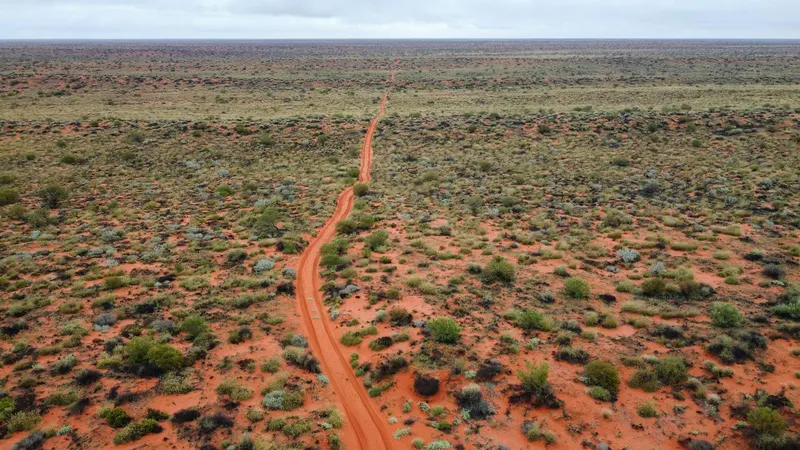
Alice Springs: 4G/5G in the city area. Route to Yulara (450 km Stuart Highway, paved): Telstra continuous, Optus with gaps in the desert.

Tasmania (Hobart, Launceston, Cradle Mountain, MONA): Hobart and Launceston 4G/5G from all carriers. Cradle Mountain: Telstra has signal only at the Visitor Centre, very patchy on the hiking trails. If you walk the Overland Track: practically no connection, PLB recommended. MONA in Hobart: continuous 4G.

Whitsundays (Airlie Beach, Hamilton Island): Airlie Beach well covered (Telstra/Optus). Hamilton Island and smaller islands: 4G in resort areas, often offline on snorkeling tours.

Great Ocean Road (Melbourne -> Adelaide): Mostly 4G along the route, some gaps in the Otway forests and around the Twelve Apostles. Telstra has fewer gaps than Optus.

Ningaloo Reef / Exmouth (WA): Telstra 4G in Exmouth, otherwise sparse. On reef tours (whale shark swimming) mostly offline.

Kakadu / Litchfield (NT): Jabiru and the main roads covered with Telstra, otherwise nothing. Litchfield Falls: only individual hotspots. If you stay overnight in the park: hotel Wi-Fi if anywhere, otherwise offline.
Which plan for which Australia trip?
| Trip type | Recommendation | Price range |
|---|---|---|
| Sydney / Melbourne weekend | Simbye 3 GB / 7 days | approx. 8 EUR |
| 2 weeks cities (Sydney + Melbourne + Cairns) | Simbye or Airalo 5 GB / 15 days | 9-12 EUR |
| 3-week East Coast road trip (Brisbane -> Cairns) | Airalo 20 GB / 30 days | 25-30 EUR |
| Outback tour (Uluru, Alice Springs) | Local Telstra Pre-Paid 50 GB / 28 days | approx. 25 EUR |
| Multi-country (Australia + New Zealand) | Airalo Discover Plus | from 30 EUR |
| Heavy user / streamer / road trip with hotspot | Holafly Unlimited 30 days | approx. 70 EUR |
Frequently asked questions about eSIMs in Australia
Which Australian network is best?
Telstra is the largest provider with around 45 % market share and by far the best coverage at ~99.7 % population coverage and over 2.7 million km2 of area — especially in the Outback (Uluru, Alice Springs, Kakadu, Gibb River Road) practically the only choice. Optus (~28 %) is very good in cities and along the coast, weaker in the hinterland. TPG/Vodafone (~22 %) focuses on East Coast metros and Perth — Outback essentially uncovered. For pure city and coastal trips any provider is fine; once Outback is in the mix: Telstra is mandatory.
Does a travel eSIM work in the Outback (Uluru, Alice Springs, Kakadu)?
Conditionally — depends on the roaming partner. Travel eSIMs mostly use Optus as their roaming partner (Airalo, Holafly, Nomad, Saily). Optus covers main traffic axes like Stuart Highway and Eyre Highway, but there are gaps off-road. For pure Outback (Mereenie Loop, Birdsville Track, Gibb River Road) you need Telstra. Some travel eSIM providers offer Telstra premium plans (more expensive, but Outback-capable) — check in the coverage check before booking. Alternative: a local Telstra prepaid SIM or Boost Mobile (runs on the full Telstra network, often cheaper).
Does the 2024 3G shutdown still affect me?
Yes — Telstra and Optus shut down 3G completely at the end of October 2024 (Vodafone/TPG already early 2024). As of 2026, 3G is dead in Australia. Implications: devices without VoLTE support (Voice over LTE) won't work for calls and SMS — even if 4G data works. Emergency call 000 requires a VoLTE-capable device on a certified network. Practically all smartphones from 2018 onwards (iPhone XS, Pixel 3, Samsung Galaxy S10) have VoLTE. Check beforehand for very old devices or Asian imports.
How much data do I need for 2-3 weeks in Australia?
Realistic rule of thumb: 5-10 GB for 2 weeks for a city mix (Sydney + Cairns + Melbourne) with Maps, WhatsApp, social. For a road trip with Spotify/podcasts on the road, offline map downloads and occasional streaming: 15-25 GB for 3 weeks. Heavy users with hotspot for the car, streaming and cloud photo backup: 30-50 GB+. Australia-specific: distances are long (Melbourne-Adelaide ~730 km), Spotify streaming adds up. Loading Maps offline packs on Wi-Fi beforehand saves a lot of GB.
What does a travel eSIM for Australia cost?
Concrete examples as of Q2 2026: 3 GB / 15 days: from 6-8 EUR (Simbye, Airalo), 10 GB / 30 days: from 15-18 EUR, 20 GB / 30 days: from 25-30 EUR, Unlimited 7 days: from 35 EUR (Holafly). Local Telstra Pre-Paid Tourist Pack: approx. 40 AUD (~25 EUR) for 50 GB / 28 days — Outback gold standard, requires a physical SIM or locally activated eSIM. Boost Mobile (on the Telstra network) often cheaper: ~30 AUD for 30 GB.
Do I need SIM registration in Australia?
No. Australia has no registration requirement for tourist data eSIMs. Travel eSIMs (Airalo, Holafly, Saily, Simbye) work immediately after activation. Local prepaid SIMs technically require identification, but as a tourist with a passport that's no problem — Telstra shops, Optus shops and 7-Eleven sell prepaid SIMs without bureaucracy drama.
What about 5G in Australia?
All three big carriers have rolled out 5G in the capitals Sydney, Melbourne, Brisbane, Perth, Adelaide, Canberra, Hobart and Darwin as well as in larger regional centers. Telstra has the largest 5G area, Optus is strong in metro zones. Telstra and Optus operate 5G Standalone (SA) in parts of the metro zones. For travelers: 5G must be explicitly included in the plan; check the data sheet. Even 4G in Australia delivers 50-100+ Mbps in cities — more than enough for Maps, streaming and hotspot.
Do I need a satellite phone or PLB for the Outback?
For routes off paved roads — Mereenie Loop, Gibb River Road, Birdsville Track, Tanami Road, Anne Beadell Highway — yes. Mobile networks aren't enough there. Recommendations: PLB (Personal Locator Beacon, from ~250 EUR purchase or free on loan from many police stations), Garmin inReach (satellite messaging via Iridium, from ~50 EUR/month), Iridium Go! or the new Starlink Mini. For classic tourist routes (Uluru on the paved Lasseter Highway, Cairns to Cape Tribulation) a Telstra eSIM is enough. Emergency call 000 works on any active network if there's reception.