Djerba, Hammamet, Sousse and Monastir have been among the most popular North African destinations for European package tourists for decades — sun, beach, medina charm and short flight times make the country attractive. But there's a trap in mobile usage that many underestimate: Tunisia is geographically close, but far away when it comes to tariffs. Without your own roaming plan, you pay a premium outside the EU zone — and anyone planning a Sahara trip to Tozeur, Douz or Matmata should also know exactly where coverage stops for good.
Ooredoo, Orange Tunisie, Tunisie Telecom — who's who?
Tunisia has three national mobile carriers. With a travel eSIM you normally don't pick the network yourself — your phone automatically registers on whichever signal is strongest:
| Network | Role | Strength | 5G status |
|---|---|---|---|
| Ooredoo Tunisia | Largest carrier, default recommendation | Best overall coverage in cities and along the coast | Since 13 Feb 2025, focused on Tunis + major cities |
| Tunisie Telecom | State-affiliated incumbent | Fastest measured speeds in 2024, strong coverage in smaller inland towns | Since 14 Feb 2025 |
| Orange Tunisie | Second major private carrier | Slightly better fringe signal near desert towns | Since 14 Feb 2025 |
Ooredoo Tunisia — the market leader
Ooredoo has the largest customer base and the most reliable coverage along the entire coast — from Tunis through Hammamet and Sousse to Djerba. For classic coastal package tourists, Ooredoo is usually the default choice among travel eSIM providers.
Tunisie Telecom — strong inland
The state-affiliated carrier Tunisie Telecom has recently stood out in measurements with the fastest data rates and above-average coverage in smaller towns away from the coast — for example on the way inland toward Kairouan or El Jem.
Orange Tunisie — a solid alternative
Orange is the second major private carrier and has shown up in tests with slightly better fringe signal near desert towns like Tozeur or Douz — though the difference from Ooredoo and Tunisie Telecom there is small; all three struggle with the same physical limits in the desert.
Why Tunisia gets expensive despite the Mediterranean location
It's an easy mistake to make: Tunisia is barely an hour's flight from Sicily, which feels like "practically Europe". Tariff-wise, though, it counts as a rest-of-world zone — the EU roaming regulation, with its capped or included prices, applies only within EU/EEA member states. For most home carriers, Tunisia is a "world" or zone-3 destination with correspondingly steep surcharges on data, SMS and calls.
Current plans for Tunisia
From our current provider database — sorted by price per gigabyte:
| Provider | Data | Validity | Price | €/GB | 5G | |
|---|---|---|---|---|---|---|
Best €/GB | 100 GB | 30 days | 30,99 € | 0,31 € | — | Visit deal → |
 | 80 GB | 60 days | 45,50 € | 0,57 €+84 % | — | Visit deal → |
 | 100 GB | 30 days | 56,95 € | 0,57 €+84 % | — | Visit deal → |
| 50 GB | 30 days | 30,50 € | 0,61 €+97 % | — | Visit deal → |
| 100 GB | 45 days | 62,99 € | 0,63 €+103 % | — | Visit deal → |
 | 50 GB | 30 days | 33,30 € | 0,67 €+115 % | ✓ | Visit deal → |
| 20 GB | 14 days | 13,50 € | 0,68 €+118 % | — | Visit deal → |
| 20 GB | 30 days | 13,99 € | 0,70 €+126 % | — | Visit deal → |
| 50 GB | 30 days | 36,99 € | 0,74 €+139 % | — | Visit deal → |
| 10 GB | 30 days | 7,55 € | 0,76 €+144 % | — | Visit deal → |
Tunis, Hammamet, Sousse, Djerba, Sahara — coverage differences
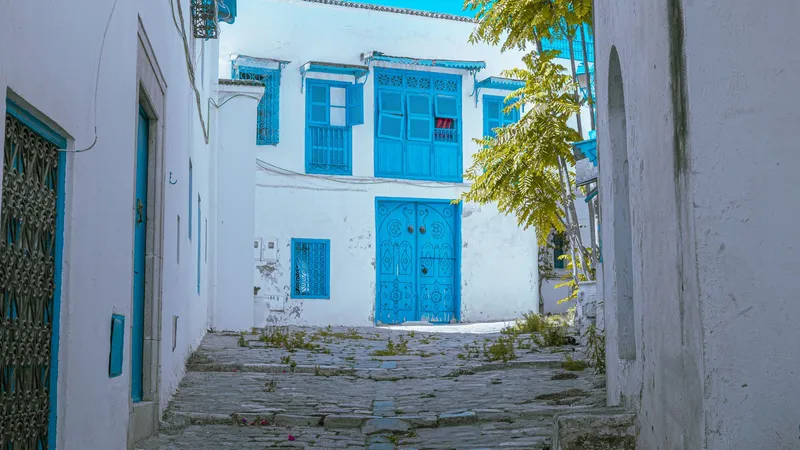
Tunis and Sidi Bou Said: Seamless 4G/5G coverage across the capital region. Good reception throughout the medina, at the Bardo Museum and in the blue-and-white alleys of Sidi Bou Said. Alongside the other major cities, Tunis is one of the few places where 5G is already available.
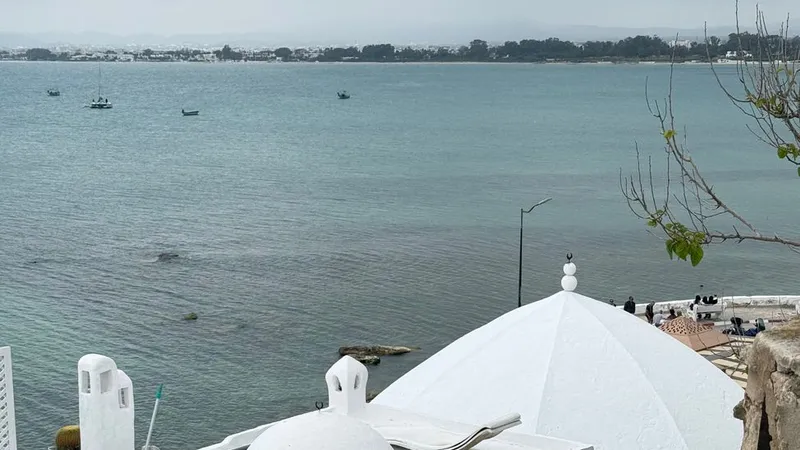
Hammamet: One of the most established package-holiday destinations, consistently well served — hotel zones, the medina and the beach promenade all have stable 4G. Coverage also stays solid for excursions into the surrounding area, for example toward Nabeul.
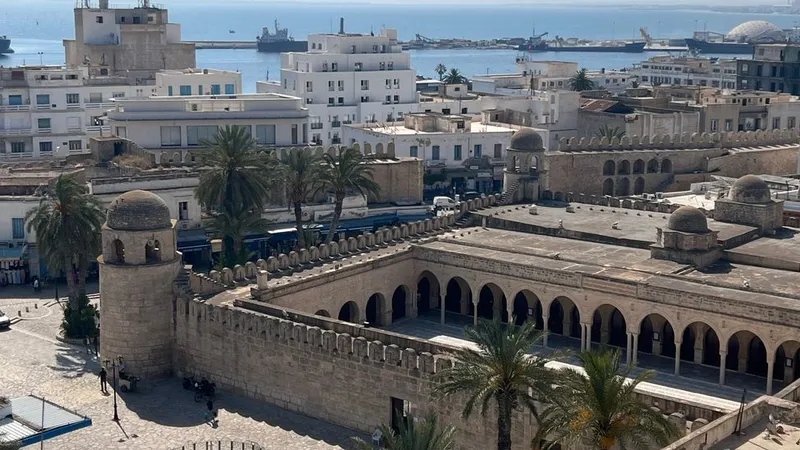
Sousse and Monastir: Both tourist hubs have dense coverage, including the hotel complexes along the coastal road between the two cities. The historic medina of Sousse (a UNESCO World Heritage site) and its Ribat are just as well covered as Monastir airport. For families needing a hotspot for a tablet, bandwidth here is usually more than sufficient.

Djerba: The island is very well built out for tourism — beach hotels, the street-art villages of Djerbahood and Djerba-Zarzis airport all have continuous 4G. Signal only gets thinner on more remote country roads in the south of the island, for example toward Guellala.

Sahara excursions (Tozeur, Douz, Matmata): In the town centres of these "desert gateways" you still get (sometimes shaky) 3G/4G. As soon as you turn onto the tracks toward Ksar Ghilane, the Grand Erg Oriental or the Chott el Jerid salt flats, coverage effectively ends — that applies equally to every SIM and every eSIM, as no provider covers the open desert. Download offline maps for your route beforehand, and on multi-day desert tours rely on your guide rather than on signal.
Which plan for which Tunisia trip?
| Trip type | Recommendation | Price range |
|---|---|---|
| Short trip to Djerba / Hammamet (3–4 days) | eSIM Fox 1 GB / 7 days | around €2 |
| 1 week package holiday (Sousse / Monastir) | Nomad 3 GB / 30 days | around €2.18 (with discount code) |
| 2 weeks incl. Sahara excursion (Tozeur, Douz, Matmata) | Orange Travel 20 GB / 30 days | around €13.99 |
| Workation / extended stay | eSIM.Net 80 GB / 60 days | around €45.50 |
| Heavy user / streamer | Holafly Unlimited | from €6.56/day (with discount code) |
| Family with hotspot for the tablet | Orange Travel 50 GB / 30 days | around €36.99 |
Common questions about eSIMs in Tunisia
Why does a Tunisia eSIM make sense if the country is right on the Mediterranean?
Because Tunisia isn't an EU country, despite the Mediterranean location. The EU's "roam like at home" rule only applies within the EU/EEA — Tunisia falls into the expensive rest-of-world or zone-3 billing tier for almost every German and EU carrier. Instead of included data, you can quickly rack up double-digit cent charges per megabyte there. A travel eSIM, on the other hand, often costs just a few euros for several gigabytes and is fixed in euros before you even fly.
Which Tunisian network is best — Ooredoo, Orange or Tunisie Telecom?
Ooredoo Tunisia is the largest carrier and the solid default choice for cities and the coast. Tunisie Telecom, the state-affiliated incumbent, recently stood out with the fastest measured speeds and strong coverage in smaller inland towns away from the coast. Orange Tunisie has shown slightly better fringe signal near desert towns in some tests. With a travel eSIM you generally don't pick a network yourself — your phone automatically registers on whichever signal is strongest.
Does the eSIM work on a Sahara excursion to Tozeur, Douz or Matmata?
In the town centres of Tozeur, Douz and Matmata you usually still get (sometimes shaky) 3G/4G from all three networks. As soon as you leave the track toward the open desert — say, toward Ksar Ghilane, the Grand Erg Oriental, or the Chott el Jerid salt flats — coverage effectively ends. That applies to every SIM and every eSIM equally; no provider covers the open desert. Practical tip: download offline maps for the route in advance, and on multi-day desert tours rely on your guide or tour operator, not your phone.
How is network coverage in Djerba, Hammamet, Sousse and Monastir?
Very good. The classic package-holiday destinations Djerba, Hammamet, Sousse and Monastir sit on the coast and are heavily built out for tourism — 4G is consistently available in hotel zones, medinas and on the beaches, and 5G is now available in the larger towns too. Coverage only gets thinner once you're off the main routes, for example on more remote country roads in southern Djerba or in the hinterland around Sousse.
Is hotel Wi-Fi in Tunisian resorts a real alternative to an eSIM?
Only to a limited extent. In many Tunisian all-inclusive resorts, Wi-Fi is noticeably slow or only really stable in the lobby and at reception — by the pool, on the beach or in the room, the connection often drops or is heavily throttled. For map navigation to an excursion, WhatsApp back home or beach Insta stories, your own eSIM data connection is far more reliable than the hotel network.
How many gigabytes do I need for a week in Tunisia?
For a normal package holiday with maps, WhatsApp, Insta stories and the occasional video call, 3–5 GB for 7 days is usually plenty. If you also stream music or video, or plan to drive a rental car with constant Google Maps navigation into the desert, go for 10 GB or more. You can estimate this more precisely with the data calculator and the eSIM data usage on holiday guide.
What does a travel eSIM for Tunisia actually cost?
From our current provider database, as of Q3 2026: 1 GB / 7 days from €1.70 (eSIM4Travel), 3 GB / 30 days from €2.18 (Nomad, with discount code), 10 GB / 30 days from €6.04 (Nomad, with discount code), 20 GB / 30 days from €13.99 (Orange Travel), Unlimited (1 day) from €2.91 (RedteaGO, with discount code, fair-use throttling) or €6.56 with Holafly (with discount code). For heavy users needing a large data allowance, Orange Travel 100 GB / 30 days for €30.99 is worth a look.
Is a local tourist SIM at the airport worth it instead of a travel eSIM?
For most tourists, not really. At Tunis-Carthage, Enfidha-Hammamet, Djerba-Zarzis and Monastir airports, Ooredoo, Orange and Tunisie Telecom all sell tourist SIMs — you need your passport, have to register at the counter, and you're billed in Tunisian dinar instead of euros. A travel eSIM, by contrast, is booked calmly from home in advance, is active the moment you land, and the price is already fixed in euros before departure — no queue at the arrivals counter.
Is 5G already available nationwide in Tunisia?
5G has been live in Tunisia since mid-February 2025 — Ooredoo launched on 13 February, with Orange and Tunisie Telecom following on 14 February 2025, on the 700 MHz and 3.5 GHz bands. It's not nationwide yet, though: coverage is currently concentrated in Tunis and the major cities. In the coastal tourist towns and inland, 4G/LTE remains the standard — plenty for streaming, navigation and hotspot use.