
The USA is one of the destinations where a travel eSIM makes the biggest difference. German roaming options usually run €5–9 per day, local prepaid SIMs at the airport cost 30–50 USD and require ID. A 30-day eSIM with 10 GB, by contrast, is available from €17 — and it's installed before you even board the plane.
Four national networks — the 3 that matter for travelers
The USA is dominated by three national mobile carriers. Which network your travel eSIM uses depends on the provider — and it influences speed, latency and coverage. Here are the key differences:
| Network | 5G coverage | Strength | Weakness |
|---|---|---|---|
| T-Mobile USA | Strong (~330M covered) | Fastest 5G in big cities, broadest 5G rollout | Patchy in rural mountain regions (Wyoming, Montana) |
| AT&T | Medium (~310M covered) | Best rural coverage, stable in the Midwest | Slower 5G than T-Mobile in cities |
| Verizon | Very strong (~340M covered) | Most robust voice quality, best indoor coverage | Roaming restrictions — rarely usable by travel eSIMs |
T-Mobile in detail
T-Mobile is rolling out 5G the fastest, using its wide sub-6 band n41. In metro areas like New York, LA, Chicago or Miami you'll see real-world download rates between 300 and 800 Mbps. T-Mobile's weak spot is sparsely populated mountain states (Wyoming, Montana, northern Idaho) — there the eSIM often falls back to LTE or loses coverage on longer stretches. Most travel eSIMs (Airalo, Simbye, Saily, Yesim) land on T-Mobile by default.
AT&T in detail
Historically AT&T has the best rural coverage — Route 66, Utah, Nevada, Arizona, Texas. Anyone planning a road trip away from the coasts is often better served by AT&T than T-Mobile. The 5G is somewhat slower (80–300 Mbps) but more stable on highways and in smaller towns. Providers that specifically target AT&T: Holafly, Ubigi, eSIMo.
Verizon — usually unavailable
Verizon is in theory the most robust network (best indoor coverage, most stable voice quality), but it's practically inaccessible to travel eSIMs. Verizon has very strict roaming contracts and barely supplies international eSIM wholesalers. If you really need Verizon, your only option is a local prepaid solution (e.g. Total Wireless, Straight Talk).
Current plans for the USA
From our current provider database — sorted by price per gigabyte:
| Provider | Data | Validity | Price | €/GB | 5G | |
|---|---|---|---|---|---|---|
Best €/GB | 400 GB | 4 days | 6,65 € | 0,02 € | ✓ | Visit deal → |
| 300 GB | 3 days | 4,99 € | 0,02 € | ✓ | Visit deal → |
| 800 GB | 8 days | 13,31 € | 0,02 € | ✓ | Visit deal → |
| 1200 GB | 12 days | 19,97 € | 0,02 € | ✓ | Visit deal → |
| 700 GB | 7 days | 11,65 € | 0,02 € | ✓ | Visit deal → |
| 1400 GB | 14 days | 23,30 € | 0,02 € | ✓ | Visit deal → |
| 2500 GB | 25 days | 41,61 € | 0,02 € | ✓ | Visit deal → |
| 900 GB | 9 days | 14,98 € | 0,02 € | ✓ | Visit deal → |
| 2000 GB | 20 days | 33,29 € | 0,02 € | ✓ | Visit deal → |
| 1100 GB | 11 days | 18,31 € | 0,02 € | ✓ | Visit deal → |
iPhone, Alaska, Hawaii — when it gets complicated
The USA has a few quirks you should know about before booking:
Alaska
Coverage is good in Anchorage, Fairbanks and Juneau. As soon as you head into the wilderness parks (Denali, Kenai Fjords) or further north, the mobile network often drops out completely — and that goes for all providers. Plan offline maps, switch "Find My iPhone" to Mesh mode and on multi-day trips bring a satellite emergency device (Garmin inReach or similar).
Hawaii
On the main islands (Oahu, Maui, Big Island, Kauai) coverage in tourist zones is blanket. Highland hikes on Mauna Kea or the Haleakala crater often have dead spots — again, prepare offline maps.
Puerto Rico, Guam, US Virgin Islands
Not every USA eSIM covers these territories. Some travel eSIMs cover only the Lower 48 states + D.C. and exclude Alaska/Hawaii. Check the plan details to see whether "US territories" are included. Usually yes for Airalo and Simbye, sometimes not for Holafly.
Coverage in the most important US travel regions

New York City (Manhattan, Brooklyn, Queens, Bronx): Seamless 4G/5G coverage from all three major carriers. Streaming, hotspot, video calls everywhere. Subway: in most stations there's been 4G/5G via distributed antennas since 2024 — between stations often no signal. Times Square and Midtown are continuously served.
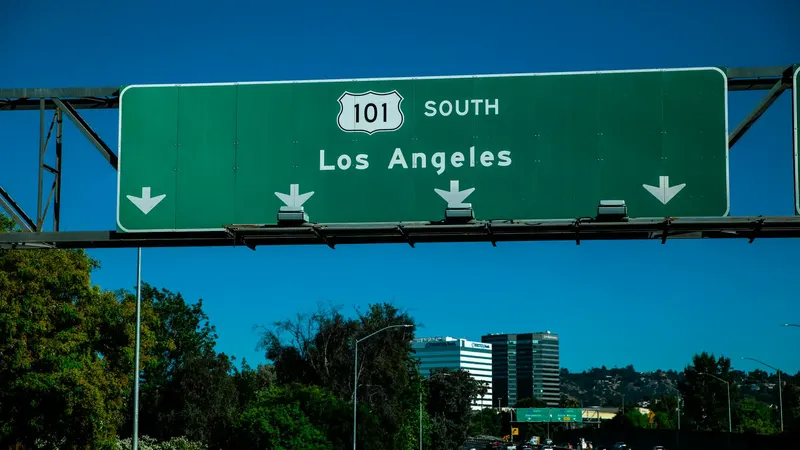
Los Angeles & San Francisco / Bay Area: 5G is strong in the business districts. T-Mobile dominates in both cities — travel eSIMs usually roam onto T-Mobile, which is the right call here. Across LA suburbs (Pasadena, Santa Monica) and Silicon Valley coverage is blanket.

Florida (Miami, Keys, Orlando): Miami and Orlando run strong 4G/5G. The Florida Keys (Key Largo to Key West, ~200 km of island bridge): 4G along Highway 1 with occasional gaps. Verizon is the strongest carrier in the south. Everglades National Park: only Verizon, and only spotty.

Las Vegas / Grand Canyon (Nevada / Arizona): Las Vegas Strip has 5G from all carriers. Grand Canyon (South Rim, the tourist end): 4G at the Visitor Center and main lookouts, no signal inside the canyon itself. North Rim: noticeably thinner coverage.

Yellowstone / Grand Teton (Wyoming, Montana): Verizon dominates the region — anyone with a T-Mobile eSIM often sees no signal outside the bigger lodges. AT&T is better than T-Mobile here. Geyser basin (Old Faithful): 4G at the Visitor Center, often offline elsewhere.

Pacific Northwest (Seattle, Portland, Olympia): Seattle and Portland have 4G/5G from all carriers in the city centers. Olympic National Park: 4G at the entrances, in the Hoh rainforest only Verizon, and only patchy.

New Orleans / South (Louisiana, Mississippi): New Orleans (French Quarter, Garden District) has strong 4G. Stretches through the Louisiana bayou and Mississippi backcountry: 4G along I-10 / I-55, fluctuating off the highway. Plantation tours along the Mississippi: fine.

Alaska (Anchorage, Denali, Kenai Fjords): 4G is stable in Anchorage. Off the main roads, basically nothing — Alaska is sparsely populated, and many travel eSIMs exclude it. Important: check in the plan details whether Alaska is covered (see FAQ above).
Which plan for which US trip?
| Trip type | Recommendation | Price range |
|---|---|---|
| City trip NYC/LA, 5–7 days | Simbye 5 GB / 15 days | around €12 |
| Classic 2-week road trip | Airalo or Simbye 10 GB / 30 days | €17–22 |
| 4-week backpacking | Airalo 20 GB or 2× 10 GB | €30–45 |
| Streamer / heavy user / digital nomad | Holafly Unlimited 30 days | around €70 |
| Family with hotspot for the MacBook | Simbye 20 GB (shared) | around €35 |
Common questions about eSIMs in the USA
Which network do travel eSIMs use in the USA?
Most travel eSIMs (Airalo, Simbye, Nomad) route through T-Mobile USA — the country's second-strongest network with solid 5G in cities and along interstates. Holafly routes through AT&T or T-Mobile depending on location and device (as of Q1 2026). Verizon is rarely integrated by travel eSIMs because its roaming contracts are more restrictive. Dish Wireless / Boost Mobile has been the fourth national carrier since 2020 (an FCC condition after the T-Mobile/Sprint merger), but is barely used by travel eSIMs so far. In cities all three networks are stable; in rural areas (e. g. backcountry Utah, Wyoming) AT&T usually has the best coverage.
Does eSIM work in Alaska and Hawaii?
Yes, both states are part of the USA and are covered by all major travel eSIMs. Alaska: Outside the larger cities (Anchorage, Fairbanks) coverage thins out fast — many wilderness areas have no signal at all. Hawaii: Solid coverage on all major islands (Oahu, Maui, Big Island, Kauai). For hiking off the main routes, a GPS backup without data (offline maps + Garmin InReach or similar) is worth it.
Do I need my own US phone number?
Only if you need to receive calls or SMS that aren't from an OTT service — for example SMS verifications from US banks/apps, restaurant reservation calls, Uber drivers. For 90% of tourists, WhatsApp/iMessage over data is enough. If you do need a US number: Holafly Voice plans, or a local prepaid SIM from Mint Mobile / US Mobile.
Buying a US iPhone in Europe — what about eSIM?
Since the iPhone 14, Apple sells eSIM-only models without a SIM slot in the US. If you want to use a US iPhone in Europe, your German carrier line has to be set up as an eSIM (free at Telekom/Vodafone/o2), and the travel eSIM runs in parallel as a second profile. Check the model number when buying (MX… = US, MU/MV… = EU).
Are 5G plans in the USA noticeably faster?
Yes, significantly. T-Mobile and AT&T have blanket 5G in major cities with real-world speeds of 200–500 Mbps (measured in NYC, LA, Chicago). LTE sits at 30–80 Mbps. For streaming and video calls the difference is very noticeable. Requirement: your phone has to support 5G (iPhone 12+, Galaxy S20+, Pixel 5+) and the plan has to include 5G — not all do.
Is tethering (hotspot) allowed on US plans?
With Airalo, Simbye, Nomad: yes, with no extra limit (it counts against your data bucket). Holafly Unlimited USA: yes, but throttled to typically 500 MB/day for hotspot, even though the main allowance is unlimited. If you tether your laptop or share with the family, Airalo/Simbye are the better fit.
What does a typical 14-day trip cost?
Realistic examples for moderate use (Maps, social, some streaming, around 700 MB/day): 10 GB / 30 days easily covers it. Price range: €17–25 with Simbye/Airalo, around €54 for Holafly Unlimited (15 days). Light users (just maps, WhatsApp) get by with 5 GB for around €12. Heavy users (streaming, hotspot for the laptop) need 20+ GB or unlimited.
Do US 2FA SMS work on a travel eSIM?
No. Travel eSIMs are usually data-only, they have no phone number of their own and can't receive SMS. If you use US bank accounts or American apps that require SMS 2FA: get verified to your German number (main line) or use app-based 2FA (Google Authenticator, Authy). A dual-SIM setup on the phone makes this painless.