

With over 8.5 million km2 of area and 200+ million inhabitants, Brazil is the largest and most populous country in South America — from Rio and Sao Paulo to the Caribbean-style beaches in the Northeast, the Iguacu Falls, the Amazon rainforest, the peninsula of Florianopolis and the Fernando de Noronha archipelago. The good news: a travel eSIM works reliably in nearly all tourist areas, with no passport presentation at the airport, no IMEI registration (for tourists under 90 days). You land in Rio (GIG), Sao Paulo (GRU) or Salvador, activate the eSIM on the plane and you're online when you step off.
Vivo, Claro, TIM — the three big players after Oi's breakup
Brazil had four national mobile carriers until 2022. After the 2022 breakup of Oi's mobile arm, three carriers dominate over 95 % of the market (Q3 2024, Anatel/Statista). Algar Telecom continues to exist as a regional carrier focused on Triangulo Mineiro (Minas Gerais), but is barely relevant for travelers — travel eSIMs practically never roam onto Algar.
| Network | Market share | Strength | 5G coverage |
|---|---|---|---|
| Vivo (Telefonica Brasil) | approx. 36 % | Market leader, best 5G coverage — Sao Paulo, Rio, Brasilia blanket coverage | 67.7 % population, 716 cities, 17,184 5G sites |
| Claro (America Movil) | approx. 35 % | Very much on par with Vivo, often cheapest roaming deals — currently the best choice on Fernando de Noronha | ~54 % population, 317 cities |
| TIM Brasil | approx. 25 % | Largest 4G geographic coverage by their own claim, broad 5G rollout | Capital cities and larger regional centers |
Vivo — the market leader
Vivo is the Brazilian subsidiary of Spain's Telefonica and the largest provider in Brazil with around 36 % market share and ~103 million connections. Its biggest strength: 5G coverage. Vivo has 67.7 % of the Brazilian population covered with 5G — 17,184 5G sites in 716 cities. Blanket coverage in Sao Paulo, Rio de Janeiro and Brasilia. International travel eSIMs like Airalo, Holafly and Simbye mostly use Vivo or Claro as their roaming partner.
Claro — the city pick
Claro (subsidiary of Mexico's America Movil owned by Carlos Slim) is almost on par with Vivo at around 35 % market share. Very good coverage in cities and along the coast, 5G in 317 cities and ~54 % population coverage. On Fernando de Noronha currently the best provider (Vivo fluctuates, TIM practically useless there). Saily and some MobiMatter plans use Claro as their roaming partner.
TIM Brasil — the third player
TIM Brasil (subsidiary of Italy's Telecom Italia) is the third-largest provider with around 25 % market share and claims to have the largest 4G geographic coverage in the country — particularly in smaller cities and along federal highways. 5G rollout is in progress. Rarely a primary roaming partner for travelers — mentioned for completeness.
Current plans for Brazil
From our live provider database — sorted by price per gigabyte:
| Provider | Data | Validity | Price | €/GB | 5G | |
|---|---|---|---|---|---|---|
Best €/GB | 500 GB | 7 days | 17,50 € | 0,04 € | — | Visit deal → |
| 500 GB | 30 days | 28,00 € | 0,06 €+60 % | — | Visit deal → |
 | 100 GB | 30 days | 34,99 € | 0,35 €+900 % | — | Visit deal → |
 | 100 GB | 30 days | 56,95 € | 0,57 €+1527 % | — | Visit deal → |
| 25 GB | 7 days | 17,50 € | 0,70 €+1900 % | — | Visit deal → |
| 100 GB | 45 days | 70,99 € | 0,71 €+1928 % | — | Visit deal → |
| 20 GB | 30 days | 17,99 € | 0,90 €+2470 % | — | Visit deal → |
| 50 GB | 30 days | 46,95 € | 0,94 €+2583 % | — | Visit deal → |
| 50 GB | 30 days | 49,99 € | 1,00 €+2757 % | — | Visit deal → |
 | 50 GB | 180 days | 60,21 € | 1,20 €+3341 % | — | Visit deal → |
Rio, Sao Paulo, Iguacu, Amazon — coverage differences

Rio de Janeiro (Copacabana, Ipanema, Lapa, Cristo, Pao de Acucar): Continuous 4G/5G from all three carriers. Streaming, hotspot, video calls everywhere. On the cable car to Pao de Acucar (Sugarloaf): signal at both stations, fluctuating in between. Christ the Redeemer viewing platform: 4G stable.

Sao Paulo (Vila Madalena, Pinheiros, Centro, Avenida Paulista): Very good 4G/5G coverage, densest 5G in the country. Given the sheer size of the city (30+ km between districts), Maps and Uber/99 are essential — and they work area-wide in Sao Paulo.
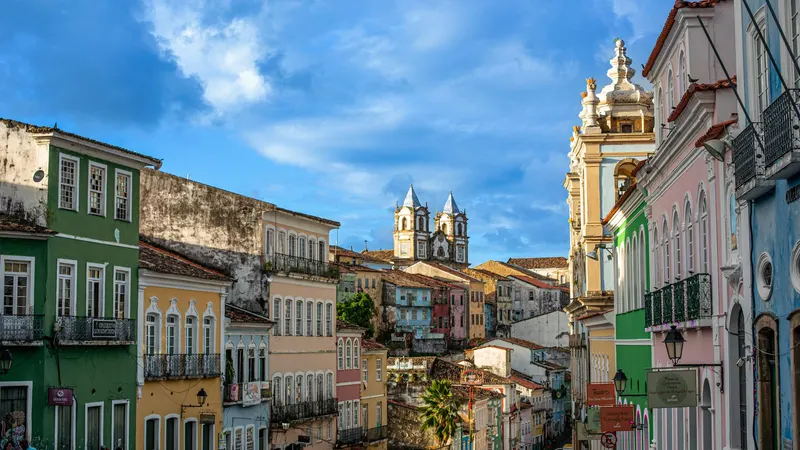
Salvador da Bahia, Recife, Olinda (Northeast): Solid 4G in city centers, 5G in expansion. Pelourinho (Salvador), Boa Viagem (Recife) continuously covered. On the beaches of Praia do Forte and Porto de Galinhas: 4G in hotel zones, weaker off the beaten track.

Foz do Iguacu (waterfalls): 4G in the city and at the waterfall park on the Brazilian side is good. Watch out at the border crossing to Argentina (Iguazu) or Paraguay (Ciudad del Este) — travel eSIMs with a Brazil-only plan usually do not roam across the border. For the Argentine side of the falls you need an Argentina or South America regional eSIM.
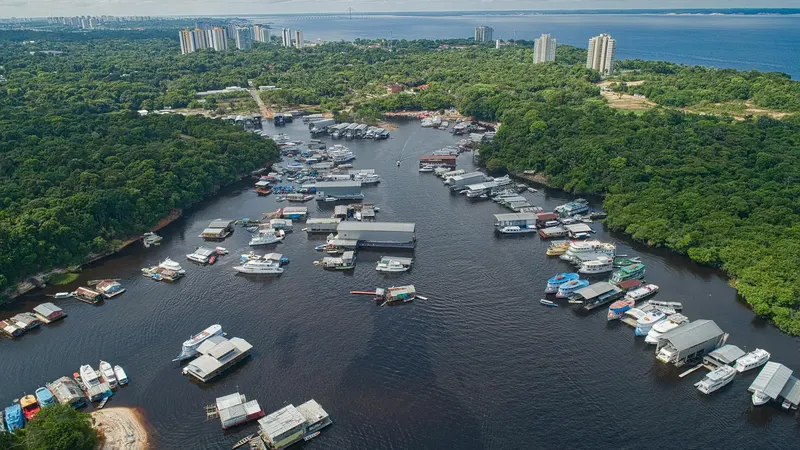
Amazon (Manaus, river cruises): 4G in Manaus itself is good, even 5G in some districts. On river cruises towards the Amazon or Rio Negro: no signal after a few hours of travel. No travel eSIM helps in the rainforest — lodges work with satellite Wi-Fi or radios.

Chapada Diamantina (trekking): 4G in the entry towns of Lencois and Vale do Capao. In the Vale do Pati (multi-day trekking route) and the wide tablelands no mobile signal. Guides work with radios and satellite communication.

Pantanal (UNESCO wetland): Individual hotspots at the lodges along the Transpantaneira road, otherwise mostly offline. Day tours by boat or horse: no signal.

Florianopolis: Continuously well covered — the surfer and backpacker island has 4G/5G in all tourist districts (Lagoa da Conceicao, Praia Mole, Joaquina, Centro). Some gaps on the beach and in the mountains.

Fernando de Noronha (archipelago off the coast): Only Vila dos Remedios, Vila do Trinta and Porto Santo Antonio well covered. Claro is currently the best, Vivo fluctuates, TIM practically useless on the island. Dive spots and remote beaches like Baia do Sancho: no signal. If you go to Noronha: prefer a Claro-based eSIM.
Which plan for which Brazil trip?
| Trip type | Recommendation | Price range |
|---|---|---|
| Rio weekend | Simbye 3 GB / 7 days | approx. 6 EUR |
| 2 weeks Rio + Sao Paulo + Iguacu | Simbye or Airalo 5 GB / 15 days | 8-10 EUR |
| 3-week backpacker (South + Iguacu + Northeast) | Airalo 20 GB / 30 days | 22-27 EUR |
| Multi-country (Brazil + Argentina + Chile) | Saily Americas or Airalo Discover Plus | from 30 EUR |
| Heavy user / streamer / digital nomad | Holafly Unlimited 30 days | approx. 60 EUR |
| Family with hotspot for the iPad | Simbye 20 GB / 30 days | approx. 28 EUR |
Frequently asked questions about eSIMs in Brazil
Which Brazilian network is best?
Vivo (Telefonica Brasil) is the largest provider in Brazil with around 36 % market share and is most often rated as the most reliable — ~103 million connections, best 5G coverage. Claro (America Movil, ~35 %) is on par in urban areas and along the coast. TIM Brasil (~25 %) claims the largest 4G geographic coverage. Travel eSIMs mostly use Vivo or Claro as their roaming partner. Algar Telecom is a regional carrier (Triangulo Mineiro) and barely relevant for travelers.
Does a travel eSIM work in Rio, the Amazon and on Fernando de Noronha?
Rio de Janeiro (Copacabana, Ipanema, Lapa, Cristo, Pao de Acucar): continuous 4G/5G from all three carriers. Sao Paulo: densest 5G coverage in the country. Amazon (Manaus): 4G in Manaus itself is good, on river cruises you'll lose signal after a few hours of travel — no travel eSIM helps here. Fernando de Noronha: Only Vila dos Remedios and the main town are well covered. Claro is currently best, Vivo fluctuates, TIM is practically useless on the island. Pantanal and Chapada Diamantina: often no mobile signal in national parks; guides work with radios and satellite communication.
Do I need SIM registration or an IMEI entry in Brazil?
No, not for tourist eSIMs. Travel eSIMs (Airalo, Holafly, Saily, Simbye) work immediately. Brazil does have an Anatel IMEI registry, but for tourists under 90 days no IMEI registration is required. Local prepaid SIMs (Vivo Pre, Claro Prezao, TIM Pre) require either a CPF (Brazilian tax ID) or passport plus a small registration fee (~10 BRL) — a travel eSIM saves you this hassle.
How much data do I need for 2-3 weeks in Brazil?
Brazil is data-intensive because WhatsApp is effectively a lifeline (bookings, restaurants, guides) and 99/Uber/iFood run constantly. Realistic: 10-15 GB for 2 weeks with normal usage (Maps, WhatsApp incl. voice messages, social, ride-hailing). 15-25 GB for 3 weeks. Light trip (just Maps + WhatsApp): 5-8 GB for 2 weeks. Heavy users with streaming and hotspot: 25 GB+ or unlimited. More precisely: data calculator.
What does a travel eSIM for Brazil cost?
Concrete examples as of Q2 2026: 3 GB / 15 days: from 5-6 EUR (Simbye, Airalo), 5 GB / 15 days: from 8 EUR, 10 GB / 30 days: from 14 EUR, 20 GB / 30 days: from 22 EUR, Unlimited 7 days: from 27 EUR (Holafly, with fair use). Local Vivo Pre is cheaper per GB (e. g. 30 BRL for 5 GB ~5.50 EUR), but requires CPF and 10-15 min activation in the shop — for 1-3 week trips a travel eSIM pays off.
Do WhatsApp, Uber, 99 and iFood work with a travel eSIM?
Yes, no problem. WhatsApp is the most important app in Brazil — hotels, tour guides, restaurants almost only communicate via it. Uber is available nationwide. 99 (local competitor, owned by DiDi) is often cheaper than Uber and has a strong market position in Brazil. iFood (delivery, ~83 % market share) is standard for orders. All apps just need internet, no Brazilian phone number — register with a German number + SMS verification.
What about 5G in Brazil?
Brazil has 5G active in over 895 municipalities in all 26 states + DF (as of Q4 2025, Anatel/TI Inside). Vivo: 67.7 % population coverage, 716 cities, 17,184 5G sites. Claro: ~54 % population coverage, 317 cities. TIM: leading in 4G geographic coverage, broad 5G rollout. Heavily built out in Sao Paulo, Rio de Janeiro, Brasilia, Belo Horizonte, Salvador. For travelers: 5G must be explicitly included in the eSIM plan.
Are X (Twitter), Telegram or Rumble blocked in Brazil?
Current status: X (Twitter) was blocked from 30 August to 8 October 2024, since then unblocked again (the case against Musk was dismissed in March 2026). Telegram: repeatedly blocked briefly (most recently 2023), currently available. Rumble: permanently blocked since 20 February 2025. Brazilian network blocks affect travel eSIMs just like local SIMs — only a VPN reliably circumvents them (NordVPN, Surfshark, ProtonVPN from ~3 EUR/month, VPNs are legal in Brazil).