With the imperial cities of Marrakech, Fes and Rabat, the Sahara desert, the Atlas mountains and the blue mountain village of Chefchaouen, Morocco is one of the most exciting destinations in North Africa. The good news: a travel eSIM works reliably in nearly all tourist areas — no passport presentation at the airport, no IMEI registry — and the historic 2016 WhatsApp Voice block is lifted. You land in Marrakech (RAK) or Casablanca (CMN), activate the eSIM on the plane and you're online before the immigration counter.
Maroc Telecom, Orange Maroc, Inwi — three nearly equally strong players
Morocco has three national mobile carriers with nearly equal market shares — according to ANRT data from 2025, Maroc Telecom (36 %), Orange Maroc (33 %) and Inwi (31 %) split the market almost on par. Which network your travel eSIM uses depends on the provider — most travel eSIMs choose Maroc Telecom because that's where rural coverage is best:
| Network | Market share | Strength | 5G coverage |
|---|---|---|---|
| Maroc Telecom (IAM) | approx. 36 % | Market leader, best rural coverage — Atlas, Sahara foothills, smaller villages | 100+ cities since Nov 2025 (license 120 MHz, biggest bandwidth) |
| Orange Maroc (formerly Mediel) | approx. 33 % | Strong in cities and tourist hotspots, weaker in the high mountains | Casablanca, Rabat, Marrakech, Fes (70 MHz license) |
| Inwi | approx. 31 % | Good urban coverage, second-best choice in remote areas | Casablanca, Marrakech (70 MHz license) |
Maroc Telecom (IAM) — the top dog
Maroc Telecom (locally known as IAM or Itissalat al-Maghrib) is the largest provider with around 36 % market share and the strongest in Opensignal's 2025 coverage rating at 9.1-9.2 out of 10. Its biggest strength: rural coverage. If you hike in the Atlas, stay overnight in the Sahara foothills or visit small villages in the Middle Atlas, Maroc Telecom gives you the most reliable signal. International travel eSIMs like Airalo, Holafly and Simbye mostly use Maroc Telecom as their roaming partner.
Orange Maroc — the city pick
Orange Maroc (formerly Mediel) is a subsidiary of the French Orange group and the second-largest provider with around 33 % market share. In Casablanca, Rabat, Marrakech and Fes, Orange is often the fastest network with the densest 5G coverage in tourist districts. Weaker in the high mountains and Sahara desert. Saily and some MobiMatter plans use Orange Maroc as their roaming partner.
Inwi — the third player
Inwi (formerly Wana Corporate, subsidiary of the ONA group) is the third-largest provider with around 31 % market share. Good urban coverage; in remote areas often the second-best choice after Maroc Telecom. 5G available in Casablanca and Marrakech. Rarely a primary roaming partner for travelers — mentioned for completeness.
Current plans for Morocco
From our live provider database — sorted by price per gigabyte:
| Provider | Data | Validity | Price | €/GB | 5G | |
|---|---|---|---|---|---|---|
Best €/GB | 500 GB | 7 days | 17,50 € | 0,04 € | — | Visit deal → |
 | 50 GB | 30 days | 14,99 € | 0,30 €+757 % | — | Visit deal → |
| 50 GB | 30 days | 17,99 € | 0,36 €+928 % | — | Visit deal → |
| 100 GB | 30 days | 36,99 € | 0,37 €+957 % | — | Visit deal → |
| 100 GB | 30 days | 55,99 € | 0,56 €+1500 % | ✓ | Visit deal → |
 | 100 GB | 30 days | 56,95 € | 0,57 €+1527 % | — | Visit deal → |
| 50 GB | 30 days | 29,99 € | 0,60 €+1614 % | ✓ | Visit deal → |
| 100 GB | 30 days | 64,99 € | 0,65 €+1757 % | ✓ | Visit deal → |
| 25 GB | 7 days | 17,50 € | 0,70 €+1900 % | — | Visit deal → |
| 20 GB | 14 days | 14,99 € | 0,75 €+2041 % | — | Visit deal → |
Marrakech, Atlas, Sahara, Chefchaouen — coverage differences
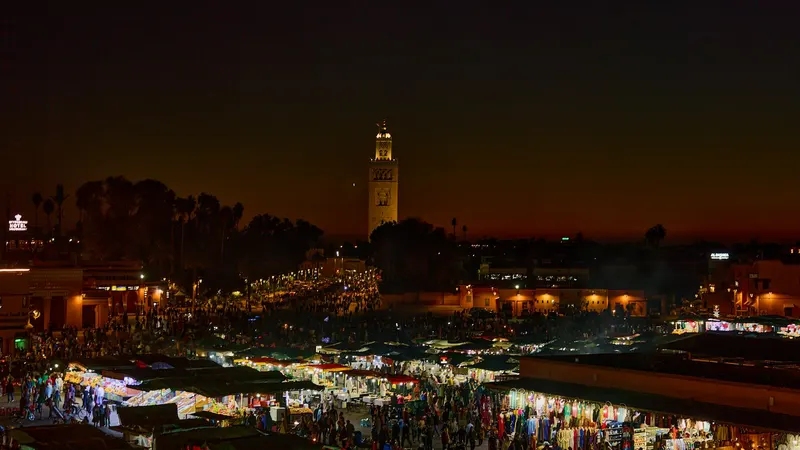
Marrakech (Medina, Jemaa el-Fnaa, Gueliz, Atlas suburbs): 4G/5G stable across the entire city. In the Medina (old town), speeds drop due to dense building and narrow alleys (often 5-15 Mbps instead of 50+ Mbps outside), but it's enough everywhere for WhatsApp and Maps. On Jemaa el-Fnaa in the evening (large tourist crowds) the network can be congested at peak hours.
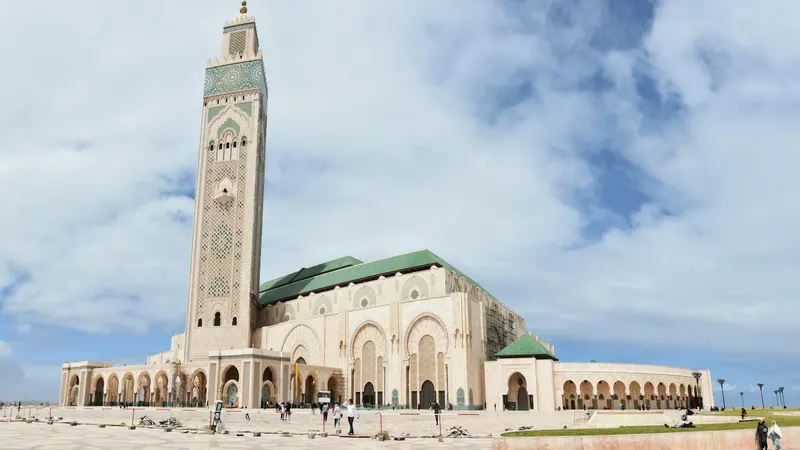
Casablanca, Rabat: Best coverage in Morocco, continuous 5G in business and tourist districts. Casablanca's Hassan II Mosque, Rabat's Kasbah des Oudaias: blanket 4G/5G.
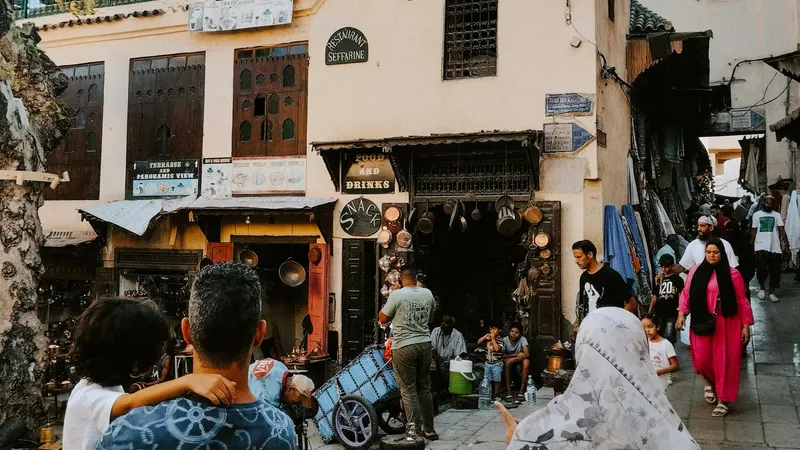
Fes (Medina, Volubilis): 4G throughout the entire Fes Medina (one of the oldest and most labyrinthine in the world — offline maps mandatory). The Roman ruins of Volubilis (1 hour north) have 4G via Maroc Telecom; other carriers are sometimes weaker.
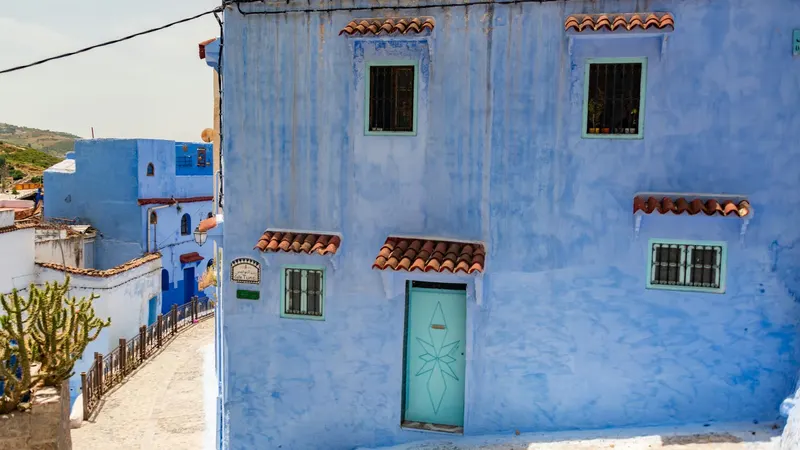
Chefchaouen (Blue Village): 4G in the Medina is solid (15-25 Mbps), on hikes into the Rif mountains and to Akchour Falls there are dead zones at times. Maroc Telecom strongest in town.
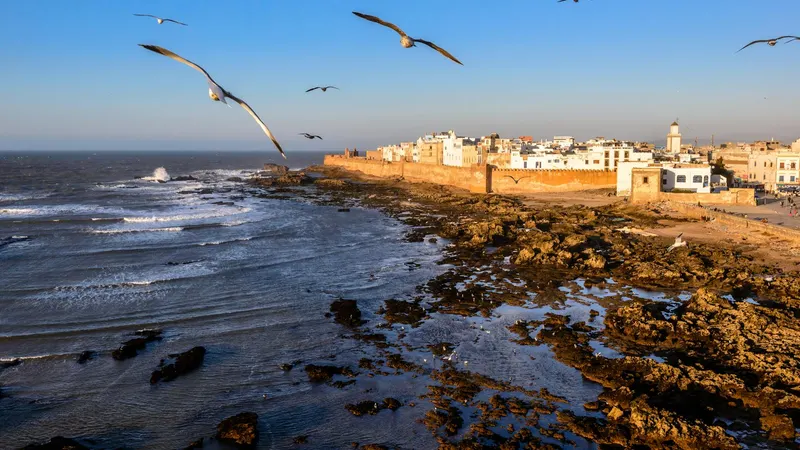
Essaouira, Agadir (Atlantic coast): 4G and partly 5G stable along all tourist promenades. Surfer beaches north/south of Agadir (Tamraght, Taghazout): continuous 4G.
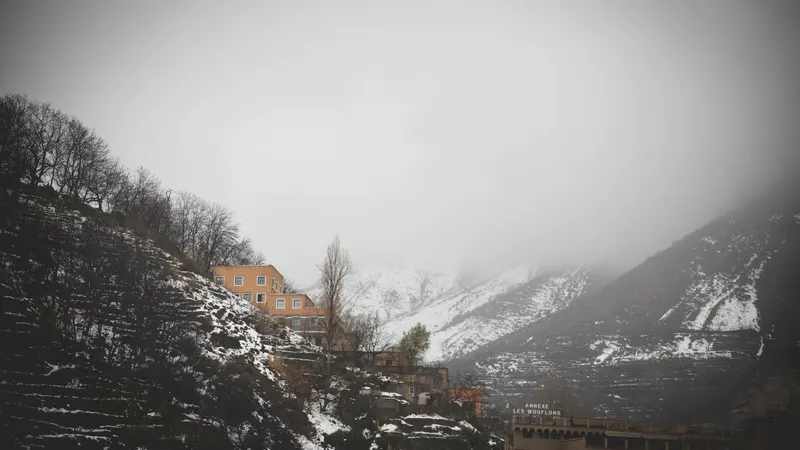
Atlas mountains (Imlil, Asni, Toubkal trekking): 4G in Imlil village (10-20 Mbps), often no signal on trekking trails above 3,000 m. If you hike Mount Toubkal (4,167 m, the highest peak in North Africa), you're practically out of network above the refuge hut — offline maps and possibly a PLB for longer tours.
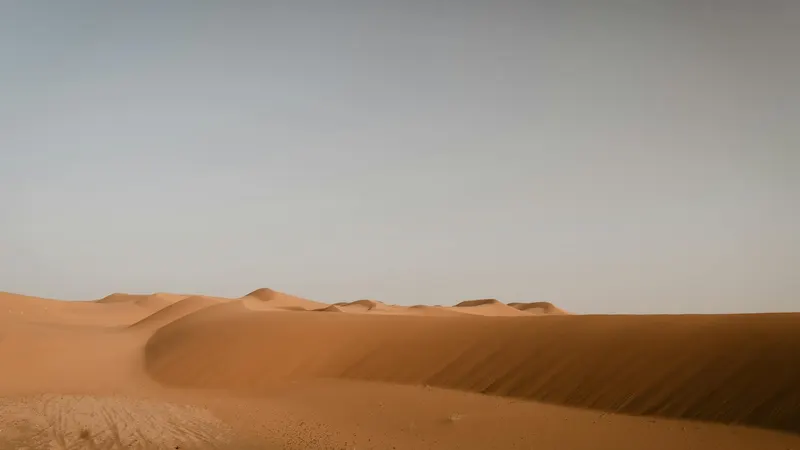
Sahara (Merzouga, Erg Chebbi): In Merzouga town, 4G via Maroc Telecom (8-15 Mbps); in the Erg Chebbi dunes only 2G or no signal at all. On camel tours and in desert camps you have no reliable network — camp operators often only have a satellite phone. Plan offline maps and meeting points in advance.
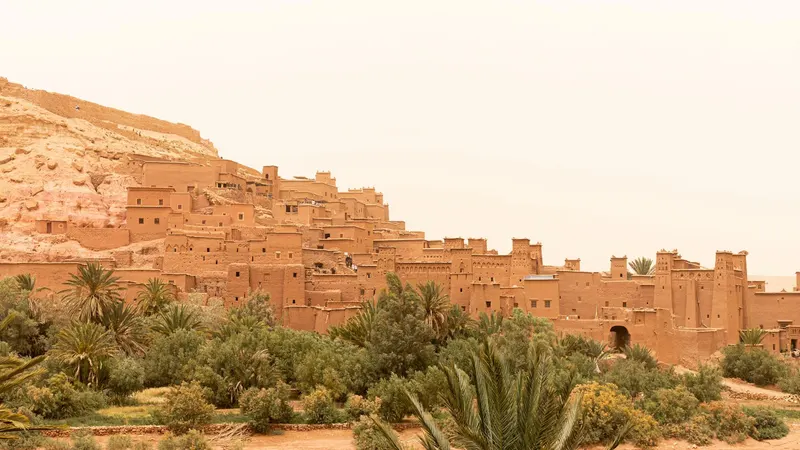
Sahara approach (Ait Ben Haddou, Ouarzazate, Dades Gorge): Ait Ben Haddou (UNESCO kasbah) has 4G in the entrance area, weaker in the alleys. Ouarzazate as the regional capital: 4G/5G. Along the route through the Dades and Todra gorges it's patchy — gorgeous photo runs, but load offline maps.
Which plan for which Morocco trip?
| Trip type | Recommendation | Price range |
|---|---|---|
| Long weekend in Marrakech | Simbye 3 GB / 7 days | approx. 6 EUR |
| 1 week Marrakech + Sahara tour | Simbye or Airalo 3 GB / 15 days | 5-6 EUR |
| 2 weeks imperial cities (Marrakech + Fes + Chefchaouen) | Airalo 5 GB / 30 days | 8-10 EUR |
| 3-week Morocco round trip + Atlas trekking | Airalo 10 GB / 30 days | 14-18 EUR |
| Andalusia + Morocco combo | Airalo Eurolink (with Morocco) | from 12 EUR |
| Heavy user / streamer / digital nomad | Holafly Unlimited 30 days | approx. 60 EUR |
Frequently asked questions about eSIMs in Morocco
Which Moroccan network is best?
Maroc Telecom (IAM) is the largest provider with around 36 % market share and the best choice for rural and remote areas — Atlas mountains, Sahara, smaller villages. Orange Maroc (formerly Mediel, ~33 %) is strong in cities and tourist hotspots, weaker in the high mountains. Inwi (~31 %) has good urban coverage. Travel eSIMs mostly use Maroc Telecom or Orange as their roaming partner — both are more than enough for Marrakech, Casablanca and all common tourist routes.
Does WhatsApp Voice work in Morocco?
Yes, again. Morocco blocked all VoIP services (WhatsApp calls, FaceTime, Skype) in 2016, but the block has since been lifted. WhatsApp and FaceTime calls work in principle. However, carriers sometimes deprioritize VoIP traffic — in rural regions you can see packet loss up to 22 % at peak hours. In cities like Marrakech or Casablanca, WhatsApp calls over a travel eSIM usually run cleanly.
Do I need SIM registration or an IMEI entry in Morocco?
No. Morocco does not run an IMEI registry for tourists like Turkey or Egypt. Travel eSIMs (Airalo, Holafly, Saily, Simbye) work immediately after activation — no passport presentation, no government registration. Only local physical Moroccan SIMs (Maroc Telecom, Orange, Inwi) require a passport at the sales counter, which takes 5-10 minutes at Marrakech Airport (RAK) or in telecom shops.
How much data do I need for 1-2 weeks in Morocco?
Realistic rule of thumb for a sightseeing trip (Maps, WhatsApp, French/Arabic translator, social with no significant streaming): 3-5 GB for 1 week, 6-10 GB for 2 weeks. If you stay in riads with good Wi-Fi, you can manage with less — many travelers cover 2 weeks on 3 GB. Heavy users with daily streaming should plan for 15 GB+. More precisely: data calculator.
What does a travel eSIM for Morocco cost?
Concrete examples as of Q2 2026: 3 GB / 15 days: from 5-6 EUR (Simbye, Airalo), 5 GB / 15 days: from 8 EUR, 10 GB / 30 days: from 14 EUR, 20 GB / 30 days: from 22 EUR, Unlimited 7 days: from 27 EUR (Holafly, with fair use). Local Maroc Telecom Tourist SIM at RAK Airport: approx. 50 MAD (~4.50 EUR) for 7 days + 1 GB, or 100 MAD (~9 EUR) for 15 GB / 30 days — attractive pricing, but expect a passport and French/Arabic-language activation.
Does a travel eSIM work in the Sahara and Atlas mountains?
Sahara (Merzouga, Erg Chebbi): In Merzouga town there is 4G via Maroc Telecom (8-15 Mbps), in the Erg Chebbi dunes only 2G or no signal at all. On camel tours and in desert camps you have to expect dead zones — camp operators often only have a satellite phone. Atlas mountains (Imlil, Asni, Toubkal trekking): 4G in Imlil village (10-20 Mbps), on trekking trails above 3,000 m often no signal. Recommendation for Sahara/Atlas: prefer a Maroc-Telecom-based eSIM, offline maps mandatory.
What about 5G in Morocco?
Morocco started 5G very late — the commercial launch of all three carriers happened on 7 November 2025. Initially in around 100 cities, with mandatory targets of 25 % population coverage in 2026 / 70 % by 2030. Maroc Telecom holds the largest license (120 MHz), Orange and Inwi 70 MHz each. 5G is usable on existing SIMs/eSIMs at no extra cost. Important for travelers: as of May 2026, 5G is still in its early stages — most tourists will mainly use 4G/LTE, which is more than enough for typical Morocco use cases (Maps, WhatsApp, translator).
Which apps do I need for Morocco?
WhatsApp is absolutely standard for any communication in Morocco — from riad bookings to tour guides to restaurant reservations. Google Translate with offline packs for French and Arabic is mandatory (app UIs are often FR/AR, EN is not guaranteed). Maps.me or Google Maps offline for medinas (very tangled) and desert routes. For ride-hailing: inDrive dominates with about 96 % market share in 10 cities, Careem and Heetch complement, Uber has been back since November 2025 (Casablanca, Marrakech).